Data is now produced at an incredible rate – right from online shopping to browsing through social media platforms to navigating through GPS-enabled smartphones, data is being accessed everywhere. Big Data professionals now fathom the enormous business opportunities by perusing petabytes of data, which was impossible to grasp previously. Organizations are taking the best advantage of this situation and rushing to make the best of these revelations about.
With state-of-the-art technology looming on the horizon, the $150-billion Indian IT industry has a high appetite for workers accomplished in the fields, like AI, Data Science, Big Data, and more.
Soon, it wouldn’t be enough to flash an engineering degree or some minor knowledge in Java or Python – the need for data science and artificial intelligence is on the rise. Automation is going to be the key to change. Globally, 12% of employers have started thinking of downsizing their workforce owing to technological advancement. Amidst all this, don’t think India would be spared. Indian bosses fear automation will reduce their headcount too. But fret not, it’s not all a bad news – there is always a silver lining after rains and that is Big Data jobs.
Shine bright with Big Data
In India, the number of job openings in the Analytics field almost doubled from the last year. Digital natives, like Amazon, Citi, HCL, IBM, and Accenture are waiting to fill close to 50000 positions, according to a study conducted by Analytics India Magazine and Edvancer. All these definitely signify parting off the dark clouds, and I can’t agree more!
Artificial Intelligence and Machine Learning are building a base of its own. Moreover, AI is deemed to be the hottest technical sector in the next 5 years and would beam in success. Along with top-of-the-line tech firms, more than 170 startups have transfixed their gaze on this field. To surf on the next wave of IT jobs, candidates need to step aside from low-in-demand stale skills to excel on budding Analytics skills. Every single HR Manager out there is seeking professionals who can manipulate algorithms and work wonders in various machine-learning models and you can be one of them!
Get better, get evolved
Expertise in languages, like Java/C/C++ gives you a certain edge, but to enter the dominating field of Big Data, techies will be asked to master intricate languages, such as Scala and Hive that are less conventional. Millennial recruiters are also looking out for those who have a keen insight for good design and flawless code architecture. “Programmers who focus on good design principals are always preferred over programmers who can just code,” Rajat Vashishta, founder of Falcon Minds, a resume consulting firm, says. “User experience matters a lot more than it used to, say, five years ago.”
Where skills in technology, like business intelligence, artificial intelligence, machine learning and DevOps are flourishing, minute attention need to be given on proper implementation of these skills, according to Aditya Narayan Mishra, chief executive officer of CIEL HR Services, a recruitment firm, otherwise all of it would be a total waste.
It’s all in the layout
Presentation matters, you agree or not! Make your resume ready to strike the job criteria you are applying for. For example, if a user interface developer wants to become a full stack developer, he must mention back-end programming skills in the profile. This will give an instant boost to the resume. The design of a resume has also changed over the years. Now, the shorter your resume the better response you get. “Most techies write pages and pages of projects in their resumes. While it is important, in most cases, the same information gets repeated. Anything above two pages is a big no,” says Vashishta.
To learn more about Data Analyst with Advanced excel course – Enrol Now. To learn more about Data Analyst with R Course – Enrol Now. To learn more about Big Data Course – Enrol Now.
To learn more about Machine Learning Using Python and Spark – Enrol Now. To learn more about Data Analyst with SAS Course – Enrol Now. To learn more about Data Analyst with Apache Spark Course – Enrol Now. To learn more about Data Analyst with Market Risk Analytics and Modelling Course – Enrol Now.
Big Data is the new big name in the present tech industry. Day by day, it is burgeoning and becoming capacious for companies, including corporate, SMBs and budding startups. It is also the major reason for better opportunities for people, who want to explore newer career realms across sectors, such as healthcare, banking, education, government, retail and manufacturing.
The current IT industry is passing through a jinxed phase, where a lot of layoff fears are on the airwaves but the field of analytics remains largely unaffected. In fact, the number of analytics jobs in the past one year has nearly doubled, as per a report by Analytics India Magazine – a platform for big data, analytics and data science and Edvancer Eduventures – an online analytics training institute. The Analytics & Data Science India Jobs Study 2017 has predicted nearly 50000 positions related to analytics are at present available to be filled in India.
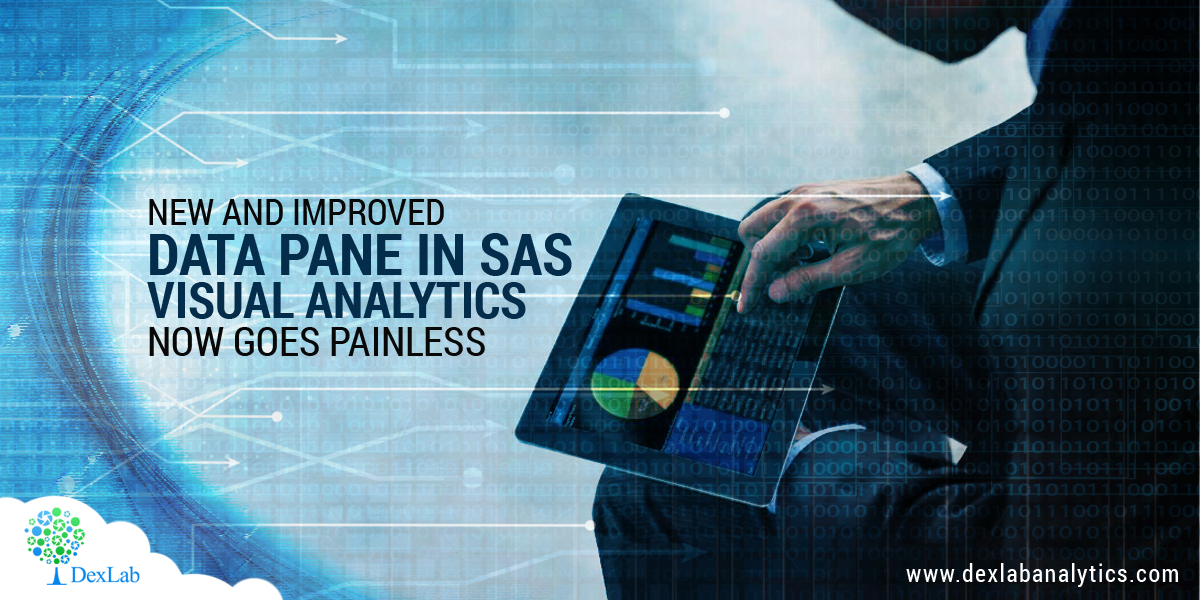
It seems some good news is waiting for you – honing your data for effective reports are easier now with the 8.1 release of SAS Visual Analytics. In this technical blog, we will understand the structure of data pane, how it exhibits data from an active data source, and a handful number of tasks, which you might want to perform – like viewing measure details, adjusting data item properties and fabricating geographic data items, custom categories and hierarchies.
With the Fourth Industrial Revolution looming ahead, many would think that we are already in a digital economy era. Well, somewhat it holds true even. There are countless new apps and software programmes that help people hail a cab, make reservations in a hotel or mop floors by using robotic technology. Smart machines have become really smart to do a plethora of highly adept jobs, which would have been a little bit difficult on the part of humans to perform.
“While technology has long been developed to serve specific business needs, we are now in an era where people are central to the design and development of technologies,” stated Bhaskar Ghosh, group chief executive, Accenture Technology Services. In a recent interview with a leading financial magazine, he talked over Accenture’s Technology Vision 2017 and gave snippets about the latest trends and innovations that have become a pre-requisite to achieve success in the more-than-ever digitised economy.
This Wednesday, at the Google I/O Keynote, there wasn’t just one major revelation, but a series of incremental improvements across several Google’s product portfolios. And the best part of the story is all the improvements are driven by discoveries in artificial intelligence – the intelligence exhibited by machines.
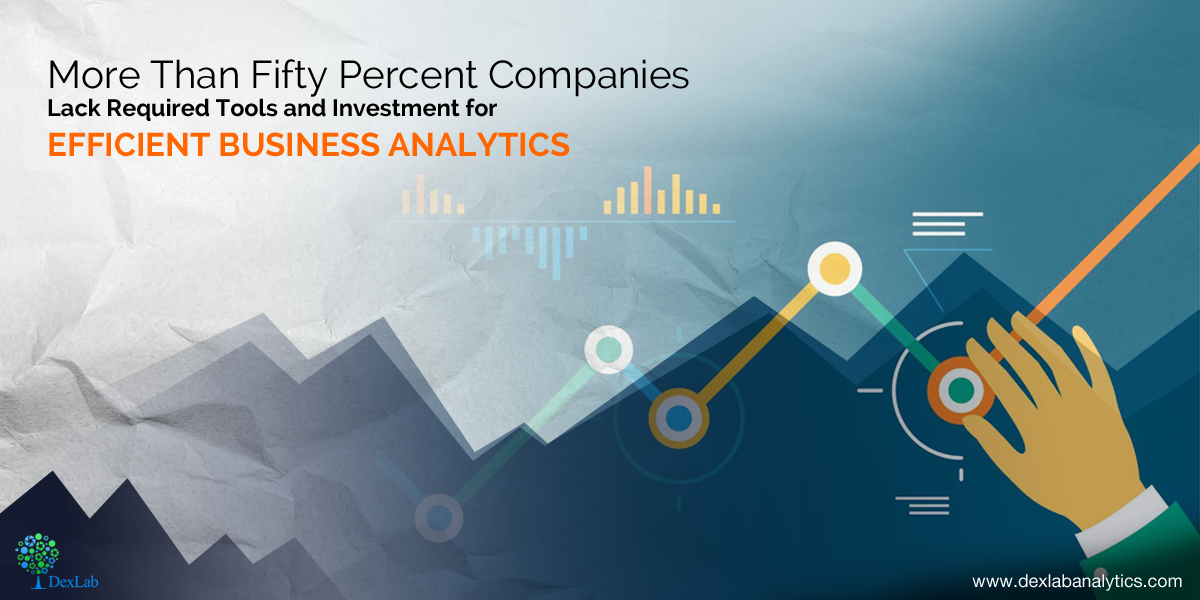
Fifty-nine percent of the companies around the world are not using Predictive Models or Advanced Analytics – says Forbes Insights/Dun & Bradstreet Study.
A recent study by Forbes Insights and Dun & Bradstreet, “Analytics Accelerates Into the Mainstream: 2017 Enterprise Analytics Study,” elucidates the ever-increasing indispensable role that analytics play in today’s business world, all the way from devising strategies to operations. The gloomy Forbes study highlights the crucial need for immediate investment, implementation and prioritization of analytics within companies.
The survey was carried on more than 300 senior executives in Britain, Ireland and North America and the report illuminates that the leading corporate giants need to invest more on the people, the processes they use and technologies that authorize decision support and decision automation.
Bruce Rogers, chief insights officer at Forbes Media was found quoting, “This study underlines the need for continued focus and investment,” he further added, “Without sophisticated analysis of quality data, companies risk falling behind.”
“All analytics are not created equal,” said Nipa Basu, chief analytics officer, Dun & Bradstreet. She explained, “This report shows a critical opportunity for companies to both create a solid foundation of comprehensive business data – master data – and to utilize the right kind of advanced analytics. Those that haven’t yet begun to prioritize implementation of advanced analytics within their organizations will be playing catch-up for a long while, and may never fully recover.”
Key findings revealed:
Need for tools and best practices
Though data usage and consumption growth brags about success, little sophistication is observed in how data are analysed. Only 23% of the surveyed candidates are found to be using spreadsheets for all sorts of data work, while another 17% uses dashboards that are a little more efficient than spreadsheets.
The survey says mere 41% rely on predictive models and/or advanced analytical and forecasting techniques, and 19% of the respondents implement no analytical tools that are more complicated than fundamental data models and regressions.
Skill deficiency stalling analytics success
Twenty seven percent of respondents diagnosed with skill gaps as a major blocker between current data and analytics efforts. Fifty two percent were found to be working with third-party data vendors to tackle such lacks of skills. Moreover, 55% of the surveyed contestants said that third-party analytics partners performs better than those who works in-house, exhibiting both a shortage of analytics capabilities among in-house analysts and a dearth in skilled workers.
Investment crunch
Survey respondents ticked lack of investment and problems with technology as the top hindrances to fulfilling their data strategy goals. Despite the increasing use of data, investment in deft personnel and technology is lagging behind.
CFO’s introspect into data for careful insights
According to the survey, 63% of those who are in the financial domains shared they are using data and analytics to discover opportunities to fund business growth. Further, 60% of the survey respondents revealed they rely on data to boost long-term strategic planning.
To learn more about Data Analyst with Advanced excel course – Enrol Now. To learn more about Data Analyst with R Course – Enrol Now. To learn more about Big Data Course – Enrol Now.
To learn more about Machine Learning Using Python and Spark – Enrol Now. To learn more about Data Analyst with SAS Course – Enrol Now. To learn more about Data Analyst with Apache Spark Course – Enrol Now. To learn more about Data Analyst with Market Risk Analytics and Modelling Course – Enrol Now.