online certification Archives - Page 15 of 15 - DexLab Analytics | Credit Risk | Market Risk | SAS Python Machine Learning Modeling

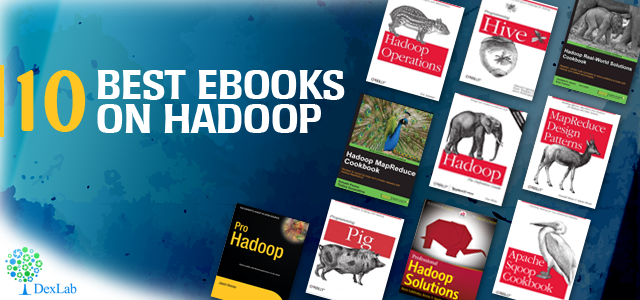
Top 10 Best Hadoop EBooks That You Should Start Reading Now

Top 10 Best Hadoop EBooks That You Should Start Reading Now

Based on Java, Hadoop is a free open source framework for programming where dealings with huge amounts of processed data in a computing environment is said to be distributed. None other than the Apache Software Foundation is sponsoring it. If you are looking for information about Hadoop, you will like to get in-depth information about the framework and its associated functions. To get you up to the mark with the concepts, the eBooks listed below will prove to be of invaluable help.

2

MapReduce

If you are looking forward to get started with Hadoop, and maximize your knowledge about Hadoop clusters, this book is of right fit. The book is loaded with information on how t o effectively use the framework to scale apps of the tools provided by Hadoop. This ebook lets you get acquainted with the intricacies of Hadoop with instructions provided on a step-by-step basis and guides you from being a Hadoop newbie to efficiently run and tackle complex Hadoop apps across a large number of machine clusters.

Also read: Big Data Analytics and its Impact on Manufacturing Sector

Programming Pig

Prog_pig_comp.indd

If you are looking for a reference from which you may learn more about Apache Pig, which happens to be the engine powering executions of parallel flows of data on the Hadoop framework which also is open source, the Programming Pig is meant for you. Not only does it serve the interests of new users but also provides advanced users coverage on the most important functions like the “Pig Latin” scripting language, the “Grunt” shell and the functions defined by users for extending Pig even further. After reading this book, analyzing terabytes of data is a far less tedious task.

Also read: What Sets Apart Data Science from Big Data and Data Analytics

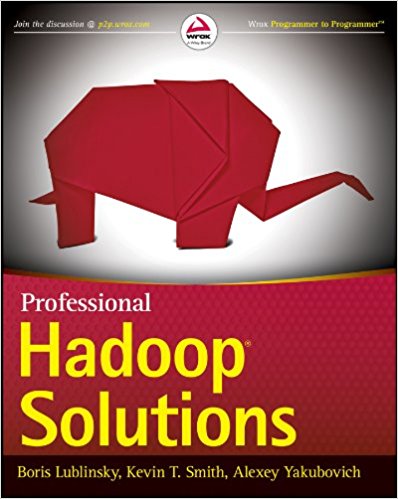
Professional Hadoop Solutions

51gb9XbHEmL._SX396_BO1,204,203,200_

This book covers a gamut of topics such as that how to store data with Hbase and HDFS, processing the data with the help of MapReduce and data processing automation with Oozie. Not limiting to that the book further covers the security features of Hadoop, how it goes along with Amazon Web Services, the best related practices and how to automate in real time the Hadoop processes. It provides code examples in XML and Java and refers to them in-depth along with what has been added to the Hadoop ecosystem of late. The eBook positions itself as comprehensive resource with API coverage and exposition of the deeper intricacies, which allow developers and architects to better customize and leverage them.

Also read: How To Stop Big Data Projects From Failing?

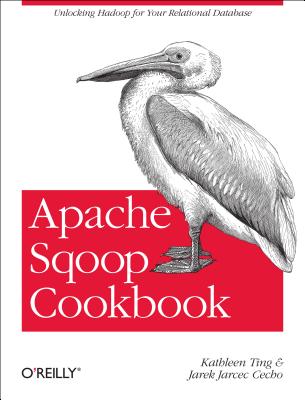
Apache Sqoop cookbook

9781449364625

This guide allows the user to use Sqoop from Apache with emphasis on application of parameters that are enabled by the Command Line Interface when dealing with cases that are used commonly. The authors offer Oracle, MySQL as well as PostgreSQL examples of databases on GitHub that lend themselves to be easily adapted for Netezza, SQL Server, Teradata etc relational systems.

Also read: Why Getting a Big Data Certification Will Benefit Your Small Business

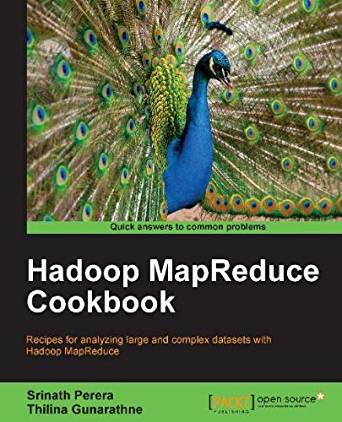
Hadoop MapReduce Cookbook

51CBDiRJBPL._SX342_QL70_

The preface of the book claims that the book enables readers to know how to process complex and large datasets. The book starts simple but still gives detailed knowledge about Hadoop. Further, the book claims to be a simple guide on getting things done in one place. It consists of 90 recipes that are offered simply and in a straightforward manner, coupled with systematic instructions and examples from the real world.

Also read: How to Code Colour Values Within SAS Enterprise Guide

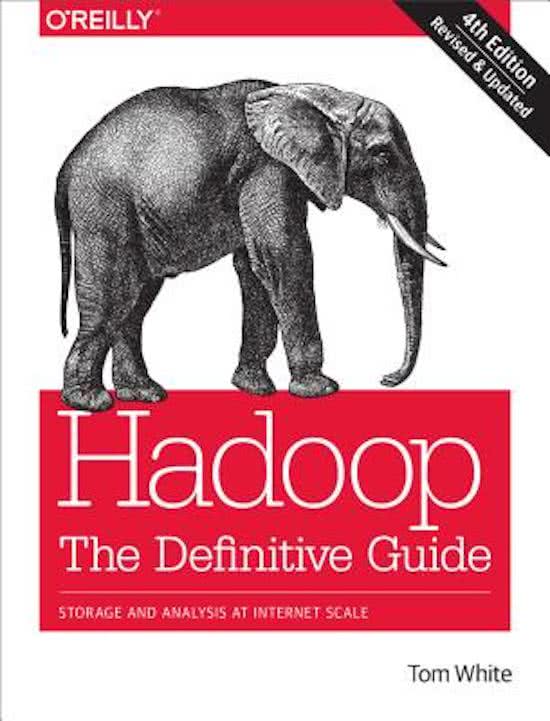
Hadoop: The Definitive Guide, 2nd Ed

9200000035483086

If you want to know how to maintain and build distributed systems that are both scalable and reliable within the framework of Hadoop then this book is for you. It is intended for – programmers who want to analyze datasets, irrespective of size; and – administrators, who seek to know the setting up and running of Hadoop Clusters, alike. New features like Sqoop, Hive as well as Avro are dealt with in the new second edition. Case studies are also included that may help you out with specific problems.

Also read: How to Use PUT and %PUT Statements in SAS: 6 Tips

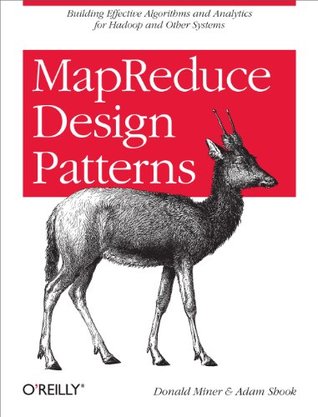
MapReduce Design Pattern

19057545

If one is to go by the book’s preface, the book is a blend of familiarity and uniqueness. The book is dedicated to design patterns by which we refer to the general guides or templates for solving problems. It is however more open-ended in nature than a “cookbook” as problems are not specified. You have to delve more in the subject matter than mere copying and pasting, but a pattern will get you covered about 90% of the whole way regardless of the challenge at hand.

Also read: SAS Still Dominates the Market After Decades of its Inception

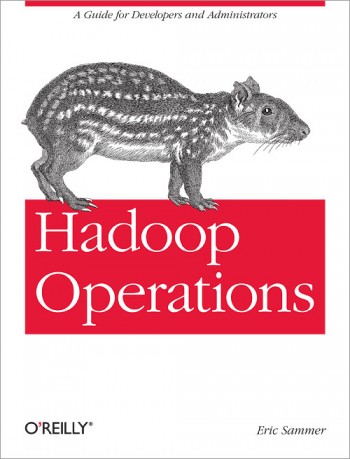
Hadoop Operations

lrg (1)

This book is necessary for those who seek to maintain complex and large clusters of Hadoop. Map Reduce, HDFS, Hadoop Cluster Planning. Hadoop Installation as well as Configuration, Authorization and authentication, Identity, Maintenance of clusters and management of resources are all dealt in it.

Also read: Things to judge in SAS training centres

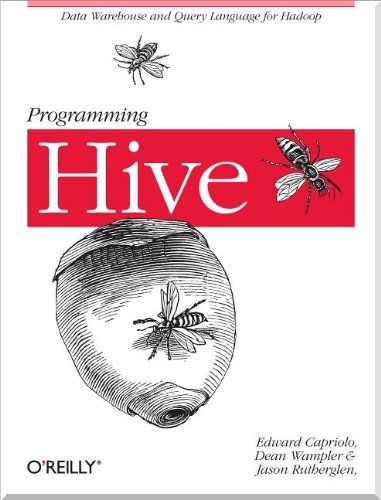
Programming Hive

programming-hive-repost-5332.jpeg

Knowledge on programming in Hive provides an SQL dialect in order to query data, which is stored in HDFS, which makes it an indispensable tool at the hands of Hadoop experts. It also works to integrate with other file systems, which may be associated with Hadoop. Examples of such file systems may be MapR-FS and the S3 from Amazon as well as Cassandra and HBase.

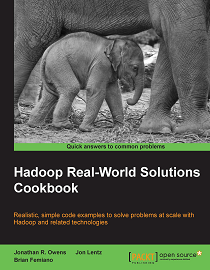
Hadoop Real World Solutions CookBook
Hadoop-Real-World-Solutions-Cookbook

The preface of this eBook illustrates its use. It lets developers get acquainted and become proficient at problem solving in the Hadoop space. The reader will also get acquainted with varied tools related to Hadoop and the best practices to be followed while implementing them. The tools included in this cookbook are inclusive of Pig, Hive, MapReduce, Giraph, Mahout, Accumulo, HDFS, Ganglia and Redis. This book intends to teach readers what they need to know to apply Hadoop knowledge to solve their own set of problems.


So, happy reading!
 

Enjoy 10% Discount, As DexLab Analytics Launches #BigDataIngestion

DexLab Analytics Presents #BigDataIngestion


Besides, feeding knowledge through eBooks, it is vital to be enrolled for an excellent Big data hadoop certification in Gurgaon. DexLab Analytics is here for you; it offers a gamut of high-end big data hadoop training in Delhi, courses that will surely hone your data skills.


Interested in a career in Data Analyst?

To learn more about Data Analyst with Advanced excel course – Enrol Now.
To learn more about Data Analyst with R Course – Enrol Now.
To learn more about Big Data Course – Enrol Now.

To learn more about Machine Learning Using Python and Spark – Enrol Now.
To learn more about Data Analyst with SAS Course – Enrol Now.
To learn more about Data Analyst with Apache Spark Course – Enrol Now.
To learn more about Data Analyst with Market Risk Analytics and Modelling Course – Enrol Now.
Data Preparation using SAS

Data Preparation using SAS

Before doing any data analysis, there are tasks which are critical to the success of the data analysis project. That critical task is known as data preparation. You may have heard that in the last years the data production is expanding at an astonishing pace. Experts now point to a 4300% increase in annual data generation by 2020. This can be due to the switch from analog to digital technologies and the rapid increase in data generation by individuals and corporations alike. The most of the data generated in the last few years are unstructured.

sass

In the above context, it is highly important to prepare your data from the unstructured dataset to a structured dataset to do a meaningful analysis.

“Data preparation means manipulation of data into a form suitable for further analysis and processing”

“Data Preparation techniques consists of Cleaning, Integration, Selection and Transformation”

We will discuss some of the data preparation techniques in SAS using SAS. INFORMAT is used to read the data with special characters. FORMAT is used to display the data with special characters.


Data DP.Practice;

length City $10.;
 input City $ ID $ Age Salary DOJ Profit;
 informat Salary dollar6. DOJ ddmmyy10. Profit dollar7.2;
 format Salary dollar6. DOJ ddmmyy10. Profit dollar7.2;
 label DOJ = "Date of Joining";
 rename Salary = Salary_of_Employee;
 datalines;
 Bangalore T101 24 $2,000 12/12/2010 $300.50
 Pune T102 29 $3,000 11/10/2006 $400.50
 Hyderabad T103 $5,000 12/10/2008 $500.70
 Delhi T104 $6,000 12/12/2009 $450.00
 Pune T105 $7,000 12/12/2009 $450.00
 ;
 run;


On the above SAS code, we have used both the INFORMAT and FORMAT to read and display the data with special characters. The SAS INFORMAT statement read the salary as numeric variable and in a specific format i.e. $5,000 which is of 6 characters including $. The FORMAT statement displays the same in your input data. Rename and label statements helps modify the variables metadata for further understanding of the dataset.

2

We will apply some transformations techniques in a dataset which helps us to apply some advanced analytical techniques in the data. We have a dataset that has various attributes of a customer who has subscribed or not subscribed an edition. In our dataset we have a categorical variable status which holds the observation either “Subscribed” or “Not Subscribed”.  We can transform the categorical variable into a dichotomous variable to run a logistic regression on our dataset.


Data media01;
 set DP.media;
 length status $15;
 If status =”subscribed” then status = “0”;
 else status = “1”;
 run;


On the above SAS code, we have applied simple If Else statements to transform our dataset called media. Transforming a categorical variable into a dichotomous variable helps us to apply the analytical techniques that we want to run in our dataset. Once after the transformation is done, the dataset is good to go for the next stage i.e. data analysis.

The more you torture your data i.e. Data Preparation, the more the success on the outcome of the data analysis.


DexLab Analytics offer state of the art SAS training courses. They are a premier SAS training institute that caters to the needs of their students round the clock.


Interested in a career in Data Analyst?

To learn more about Data Analyst with Advanced excel course – Enrol Now.
To learn more about Data Analyst with R Course – Enrol Now.
To learn more about Big Data Course – Enrol Now.

To learn more about Machine Learning Using Python and Spark – Enrol Now.
To learn more about Data Analyst with SAS Course – Enrol Now.
To learn more about Data Analyst with Apache Spark Course – Enrol Now.
To learn more about Data Analyst with Market Risk Analytics and Modelling Course – Enrol Now.
Approach – Actionable Analytics

Approach – Actionable Analytics


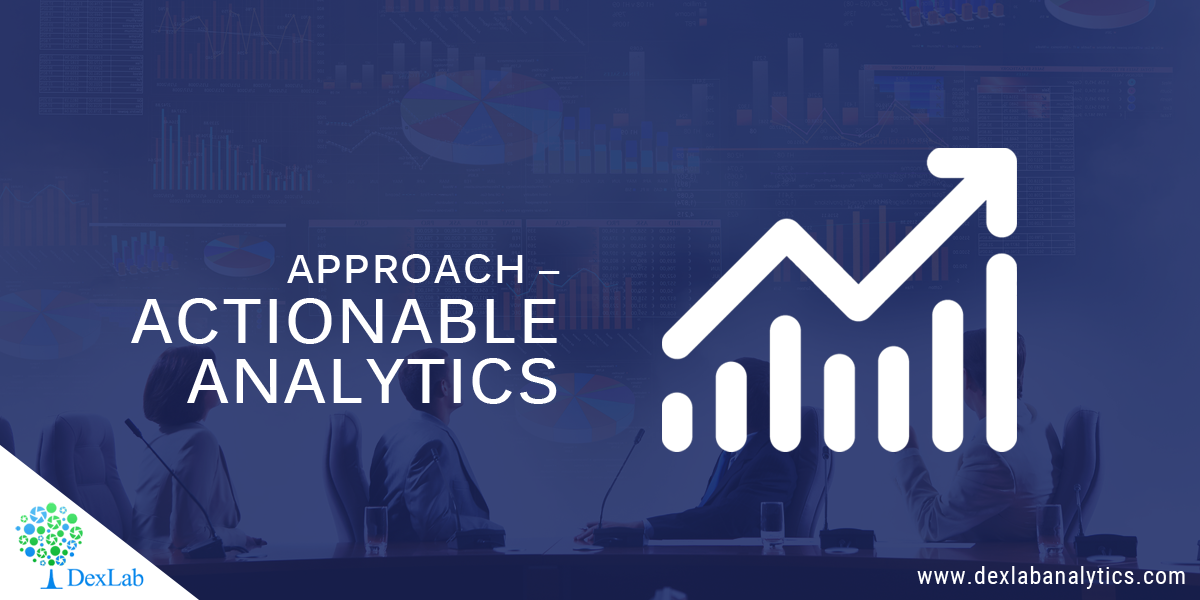
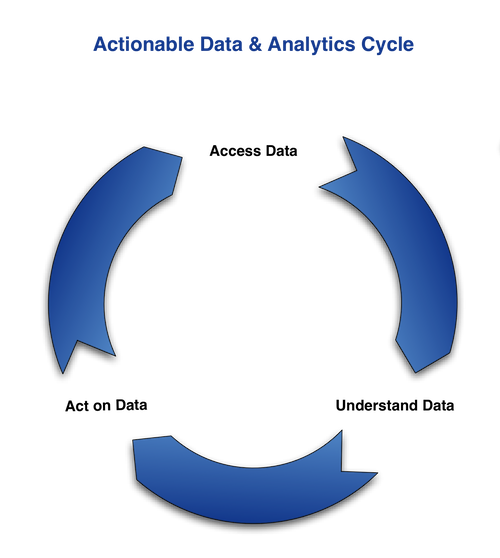
In this blog post, we will discuss on the approach we can follow to provide an actionable analytics. Doing actionable analytics is not easier said than done. It requires a focused analytical process. Here we will outline the three important phase or levers that can improve the process of delivering actionable analytics. The three phases can help you to improve the financial aspects of the business by doing actionable analytics.


  • Discover
  • Explore 
  • Engage

Actionable-Data-Analytics-Cycle_f_improf_500x558

For example, if we are delivering actionable analytics for the marketing function. In each phase we will identify some critical characteristics or parameters that are going to influence the financial value directly or indirectly.

Continue reading “Approach – Actionable Analytics”

Import and Export of dataset using SAS and R

Import and Export of dataset using SAS and R
 

For an analyst, data is a primary raw material, which is used to draw conclusions and inferences for taking business decisions. Raw data is of less help to draw conclusions and inferences. Hence, we need to put the data into any statistical analysis software to slice and dice to bring inference for better decision making. In this post, we will discuss about the steps to import and export of a dataset using SAS and R.

Continue reading “Import and Export of dataset using SAS and R”

Credit Risk Analytics and Regulatory Compliance – An Overview

Credit Risk Analytics and Regulatory Compliance – An Overview


Post the Financial Crisis of 2008, there has been an increase in the regulatory vigilance of the capital adequacy of commercial banks across the globe. Banks need to be compliant with different regulatory capital requirements, so that they can continue their operations under situations of stress. A majority of analytical work in Indian BFSI domain is to provide analytical support to US based multinational NBFC’s. We would like to throw some light on the opportunities and scope of credit risk analytics in the US banking and financial services industry. The Federal Reserve requires the banks to be compliant with three main regulatory requirements: BASEL- II, Dodd Frank Act Stress Testing (DFAST) and Comprehensive Capital Analysis and Review (CCAR).

Continue reading “Credit Risk Analytics and Regulatory Compliance – An Overview”

Quantitative Analysis 1 – Five Number Summary

To be a successful analyst or be a part of great analytics team, there are 3 important dimensions one would aspire to be or have. They are technical, business and tools. Hence, we would begin with one of the sub dimension of the technical skills, i.e. being quantified self or developing quantitative skills.

 Quantitative Analysis 1 – Five Number Summary

As per the Informs, the definition of Analytics shall be:

  Continue reading “Quantitative Analysis 1 – Five Number Summary”

Tips to Make Sense of All The Big Data Around Us, You Can Make a Difference

Tips To Make Sense Of All The Big Data Around Us, You Can Make A Difference

We are all in the midst of the onslaught of information overload in many ways. We create it, transfer it and heartily participate in it. To get a grasp of the actual reality faced by businesses of all sizes, one needs to understand the exact scenario. According to IDC1, “The big data and analytics market will reach $125 billion worldwide in 2015” Further, IDC predicts, “Clearly IoT (Internet of Things) analytics will be hot, with a five-year CAGR of 30%.”

big-data-analytics

Data is created from all the posts made every second globally on social media, the humongous chatter, digital photo sharing, video uploads, online transactions, all the cell phone signals etc. – are all forms of data being generated leading to a massive information overload across servers and of course the cloud platforms.

All this digitization has led to a severe business challenge – so much big data, but how to make sense of all this? How does one use it for any kind of business related decision or direction? The following are some tips to help business make some sense from all this data right within their ambit.

1-Break it down

Big data remains big, unless methods are employed to break it into tiny usable groups of information. Eliminating, cross-referencing and grouping are the first steps to sort out various disparate data bytes.

2-Deduplication

There will always be the challenge of similar data springing up and being stored. Deduplication works as a primary point of ensuring that there is a reduction in the same data coming up for analysis.

3-Technology and its role

The role of specific technology cannot be ignored, when it comes to ensuring that all this big data is streamlined, stored safely and processed using the latest available techniques.

Big Data Landscape

4-Do not discard anything

Even the smallest and seemingly insignificant amount of information may be relevant and hold key insights.

5-Best practices for data analysis

The ecosystem revolving around the actual analysis of the big data needs to evolve into a more standardized format to be used across flexible structures leading to quicker outputs, better results and arriving at useful insights.

6-Having the right talent

This is one of the most important aspects, when it comes to actually making sense of all the data lying around across organizations. This is where trained and certified big data analysts appear.

DexLab Analytics Presents #BigDataIngestion

A Special Alert: DexLab Analytics is offering #SummerSpecial 10% off on in-demand courses of big data hadoop, data science, machine learning and business analytics. Enroll now for #BigDataIngstion: the new on-going admission drive!

Interested in a career in Data Analyst?

To learn more about Data Analyst with Advanced excel course – Enrol Now.
To learn more about Data Analyst with R Course – Enrol Now.
To learn more about Big Data Course – Enrol Now.

To learn more about Machine Learning Using Python and Spark – Enrol Now.
To learn more about Data Analyst with SAS Course – Enrol Now.
To learn more about Data Analyst with Apache Spark Course – Enrol Now.
To learn more about Data Analyst with Market Risk Analytics and Modelling Course – Enrol Now.

Call us to know more